Formula Student · 4 cars · all five events
Open the comparisonOne connected vehicle model
Build the car.
Understand the lap.
PaceDynamics connects suspension geometry, tyre models, aero maps, motors and batteries to whole-vehicle behaviour and lap time—so you can trace every setup decision from the component that changed to the seconds it gained.
Account access is currently by invitation only. Tell me you’re interested.
Formula Student · 2 cars · battery
Open the endurance studyVehicle dynamics · yaw-moment diagram
Open the Formula Student carFrontRoll 0.0°

SidePitch 0.0°

Suspension · sketch, orthographic
The Formula Student suspension rolled and pitched on the rig, front and side. Move a hardpoint and the roll centre, camber and anti-dive follow it, and then the lap.
Open the suspension studyTyres · Magic Formula
Grip per newton falls as the load rises. That is why load transfer costs grip, and why the roll-stiffness split moves the balance.
Open the tyre studyTemplates to start from
- Speed, slowest to fastest
- Start and finish
- The car, at the lap’s own pace
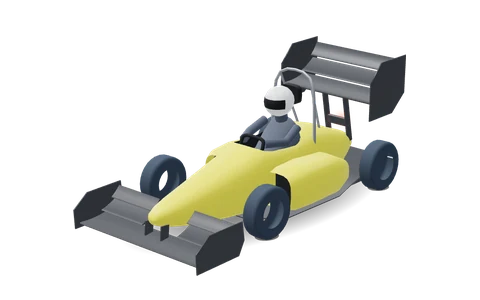
Formula Student, electric
300 kg, two motors, 80 kW · FSG, on the FS events
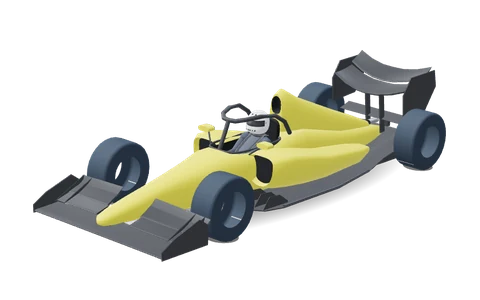
Formula 1
798 kg, a 735 kW power unit · Austin
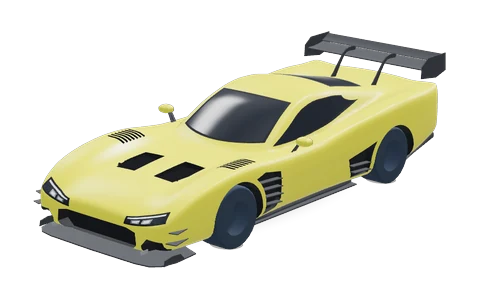
GT car
1300 kg, a 410 kW four-litre · Laguna Seca
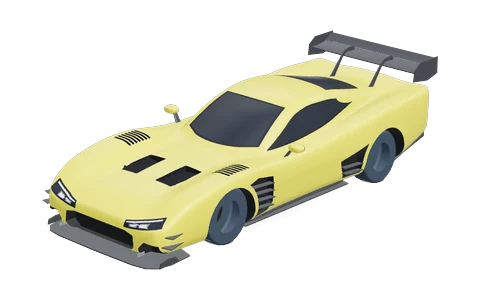
Sports car
1600 kg, a 220 kW turbo six · Nordschleife
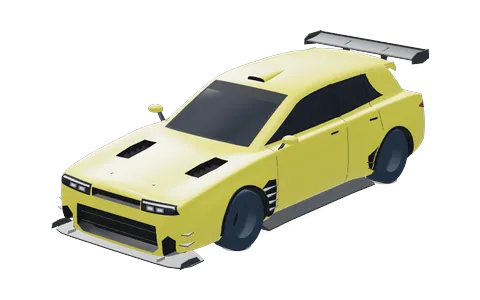
Cup car
1265 kg, 250 kW, front-wheel drive · Brands Hatch
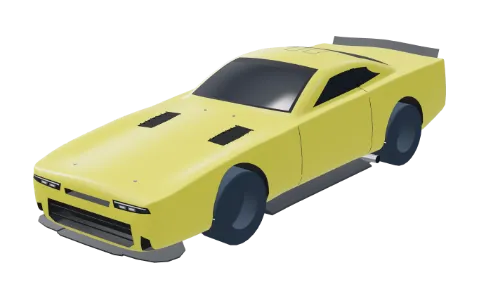
Stock car
1620 kg, a 500 kW V8, banked 25° · Bristol
*
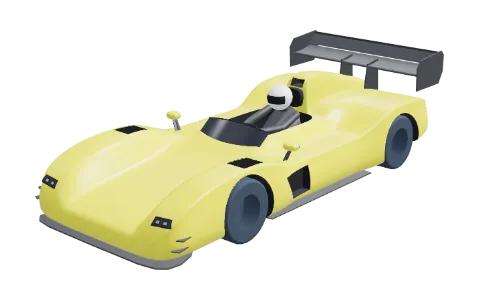
Hill-climb prototype
650 kg, 330 kW turbo, at altitude · Pikes Peak
Each car opens on its home track with the lap already solved.* under the Pikes Peak record: a circuit’s grip, no bumps.
01 / Templates
The app’s own library
Start from what you work on.
Every template the app opens with, in the areas its New project shows. Each opens on the tool it is about, with its answer or its lap already solved, ready to change into your own car.
02 / The product
From engineering data to a decision
Every model answers the same question.
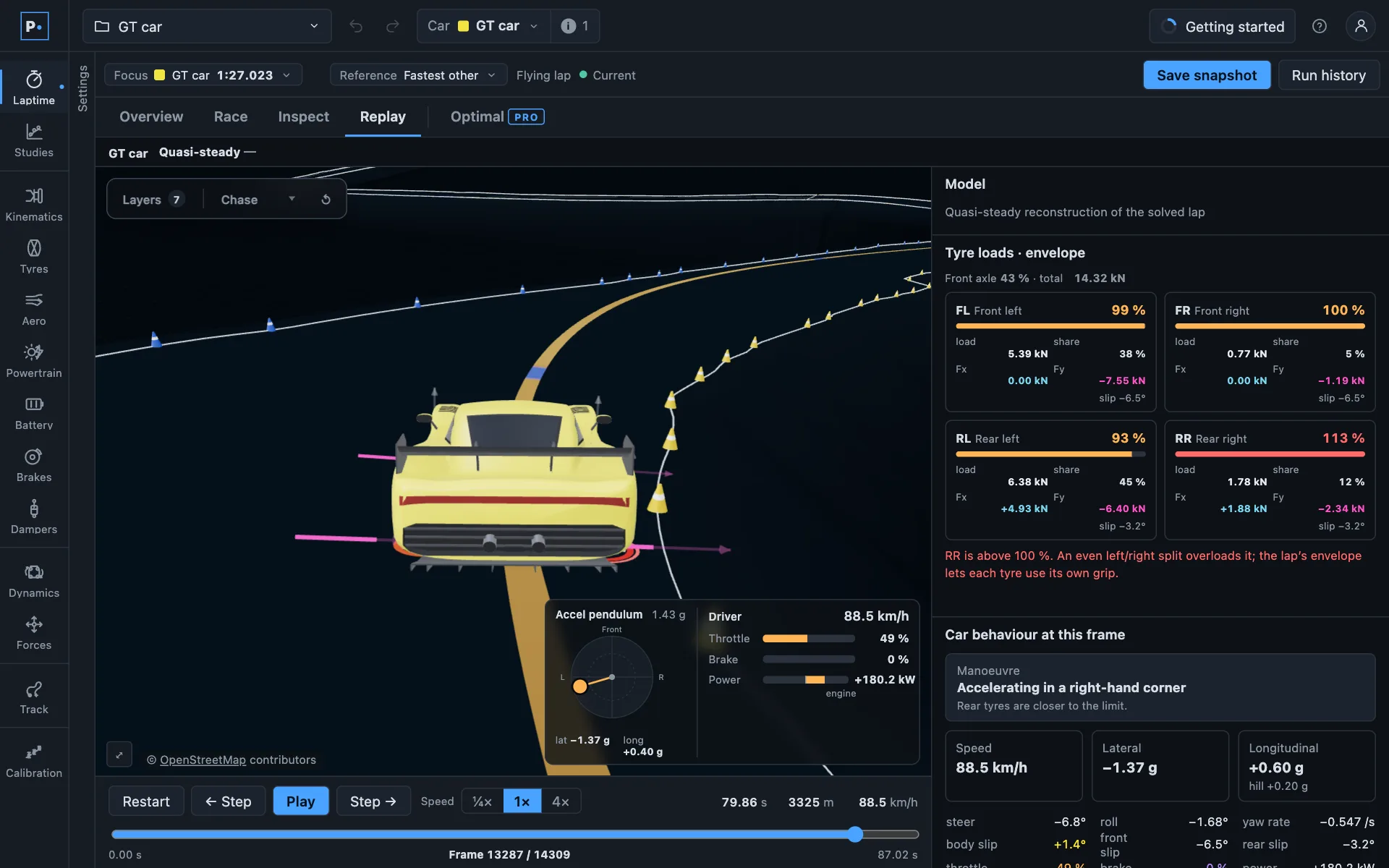
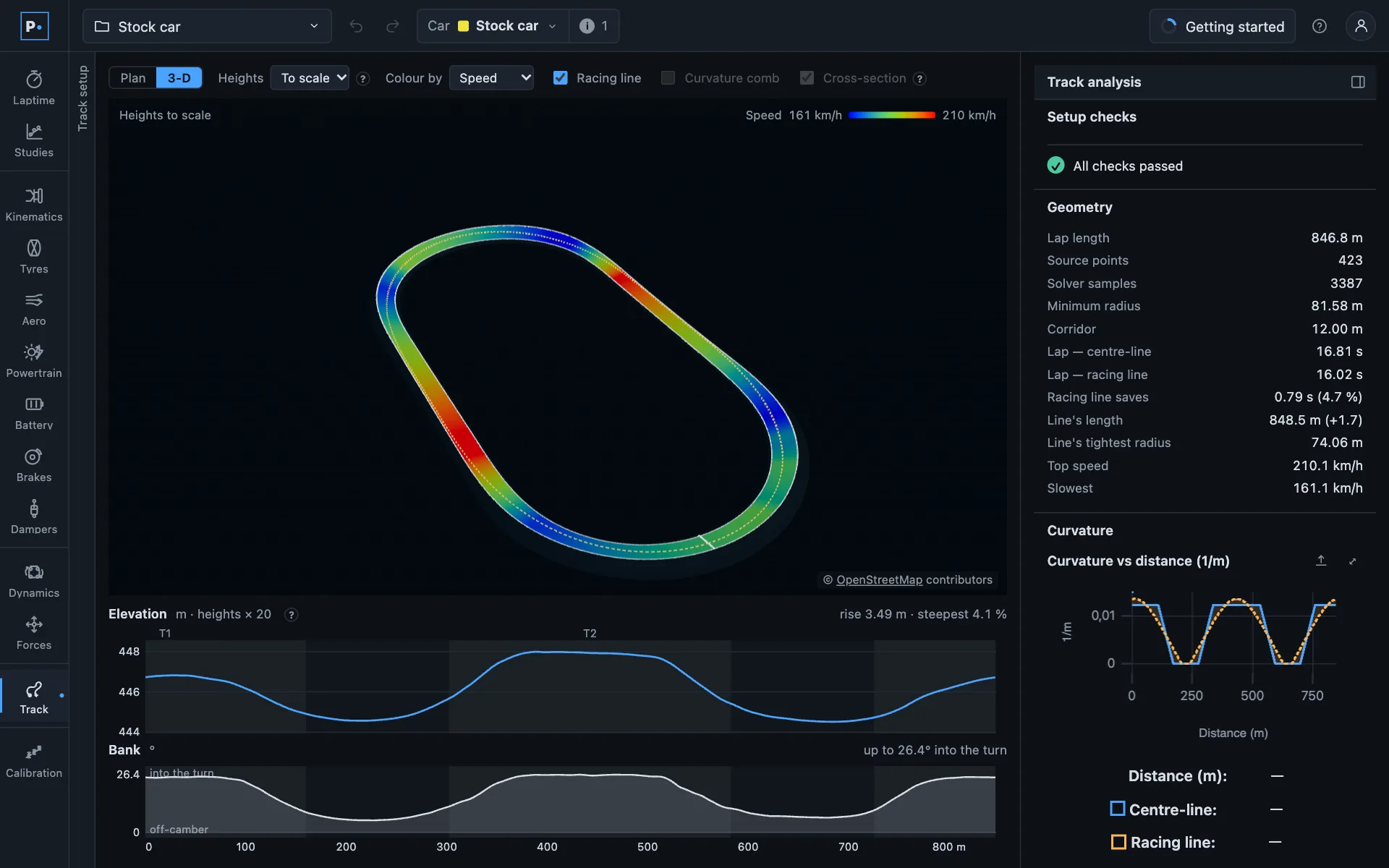
What changed, why did it change and where does it matter? This is the real app on its own templates—a Formula Student car at FSG, a GT car down the Corkscrew, a stock car round Bristol’s banking—not decorative mock-ups.
The lap
The decision
The car
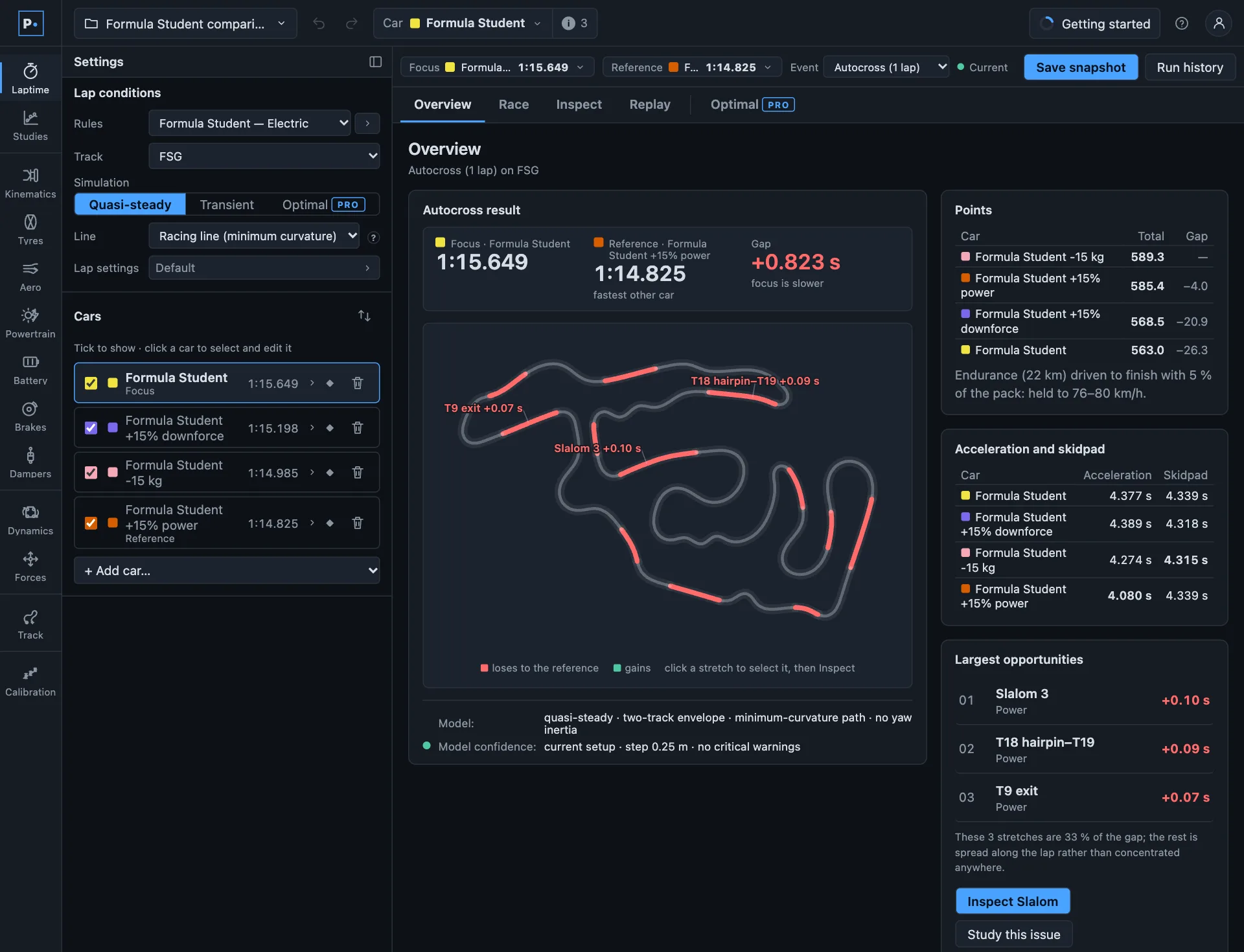
LAPTIME / EXPLAIN THE GAP
Turn a result into the next engineering task
Formula Student FSG
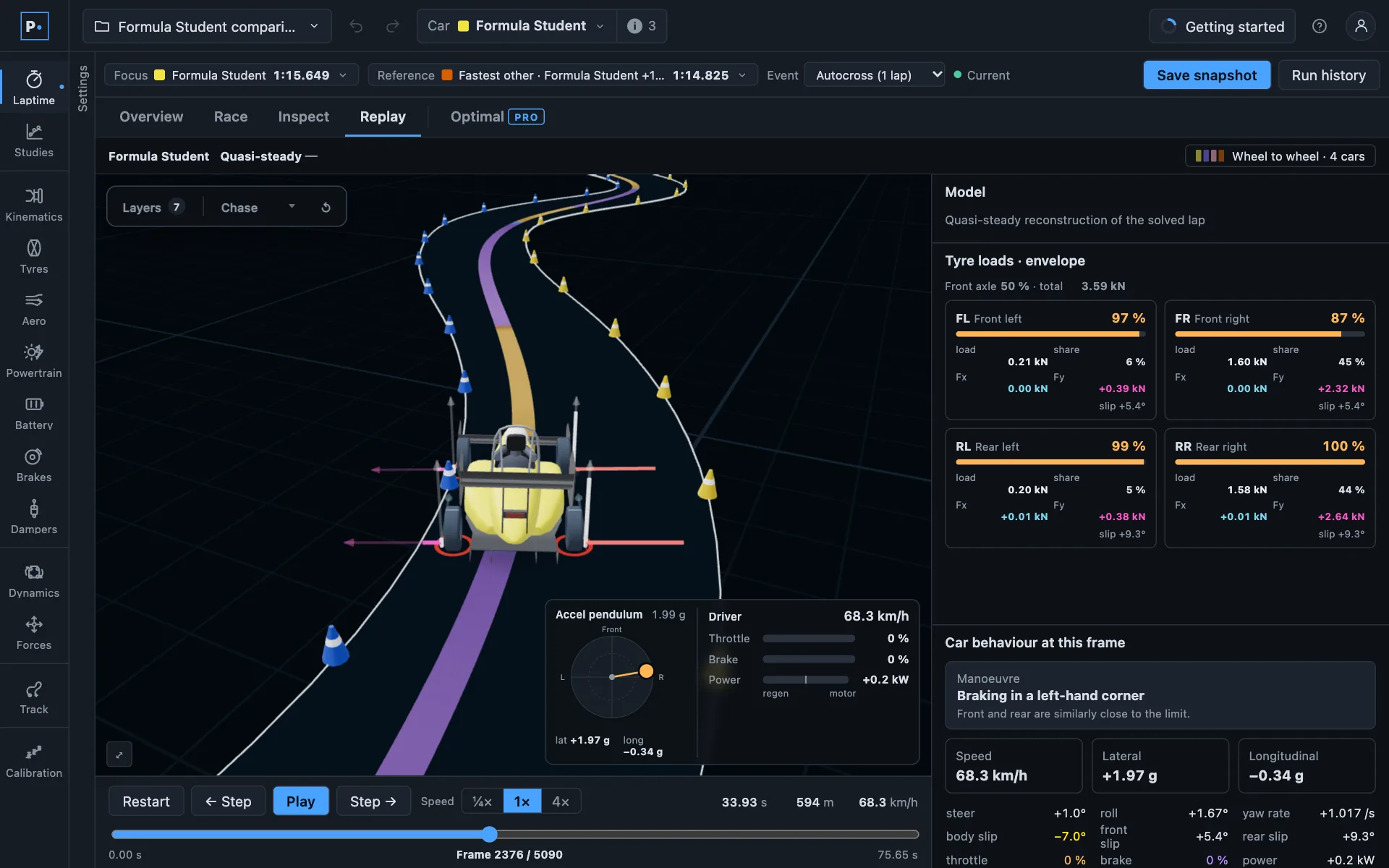
LAPTIME / 3-D REPLAY
See what the car is doing at the limit
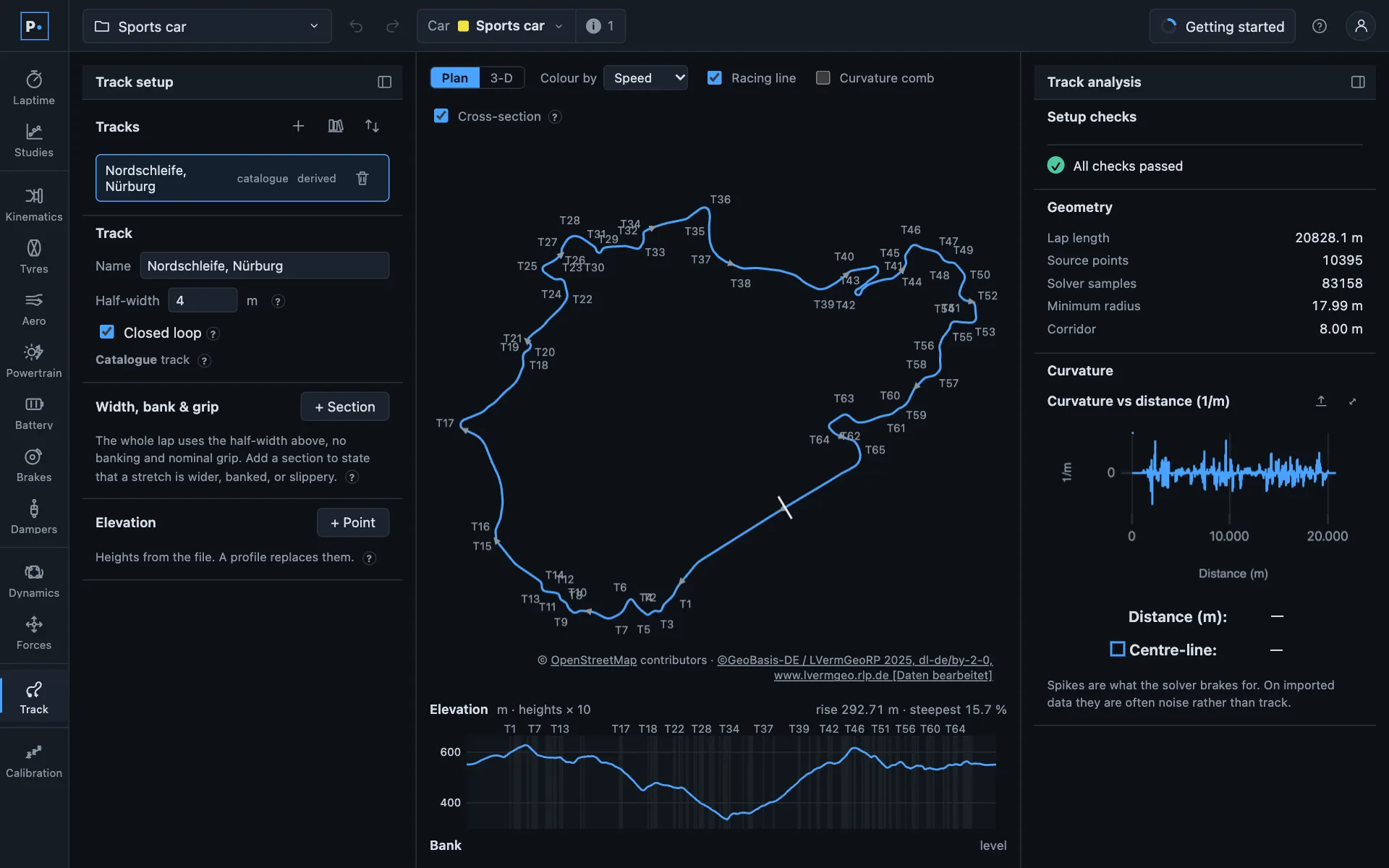
TRACK / REAL ROADS
Define the road the solver sees
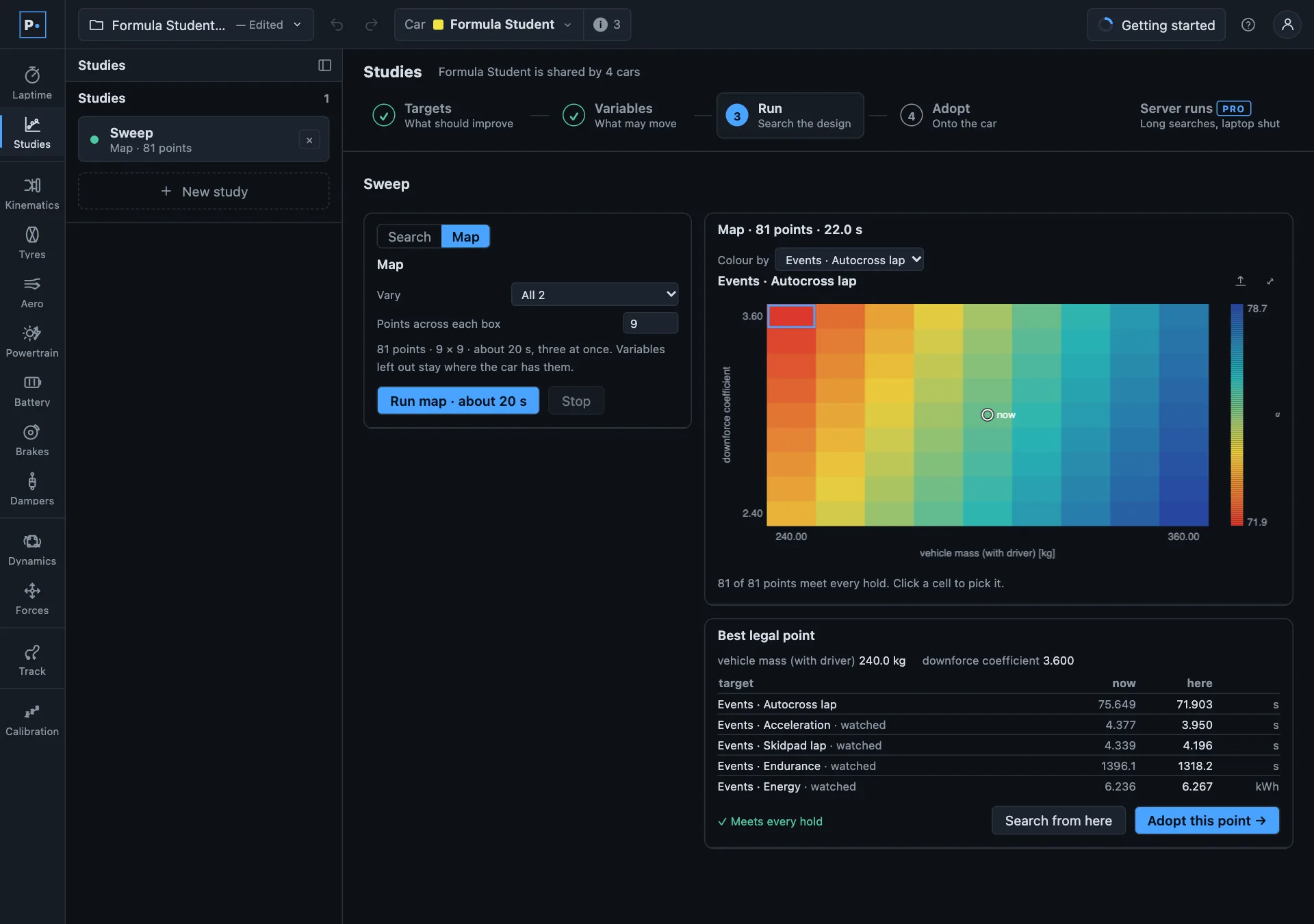
STUDIES / MAP THE DESIGN SPACE
Explore the design space, then search it
Formula Student FSG
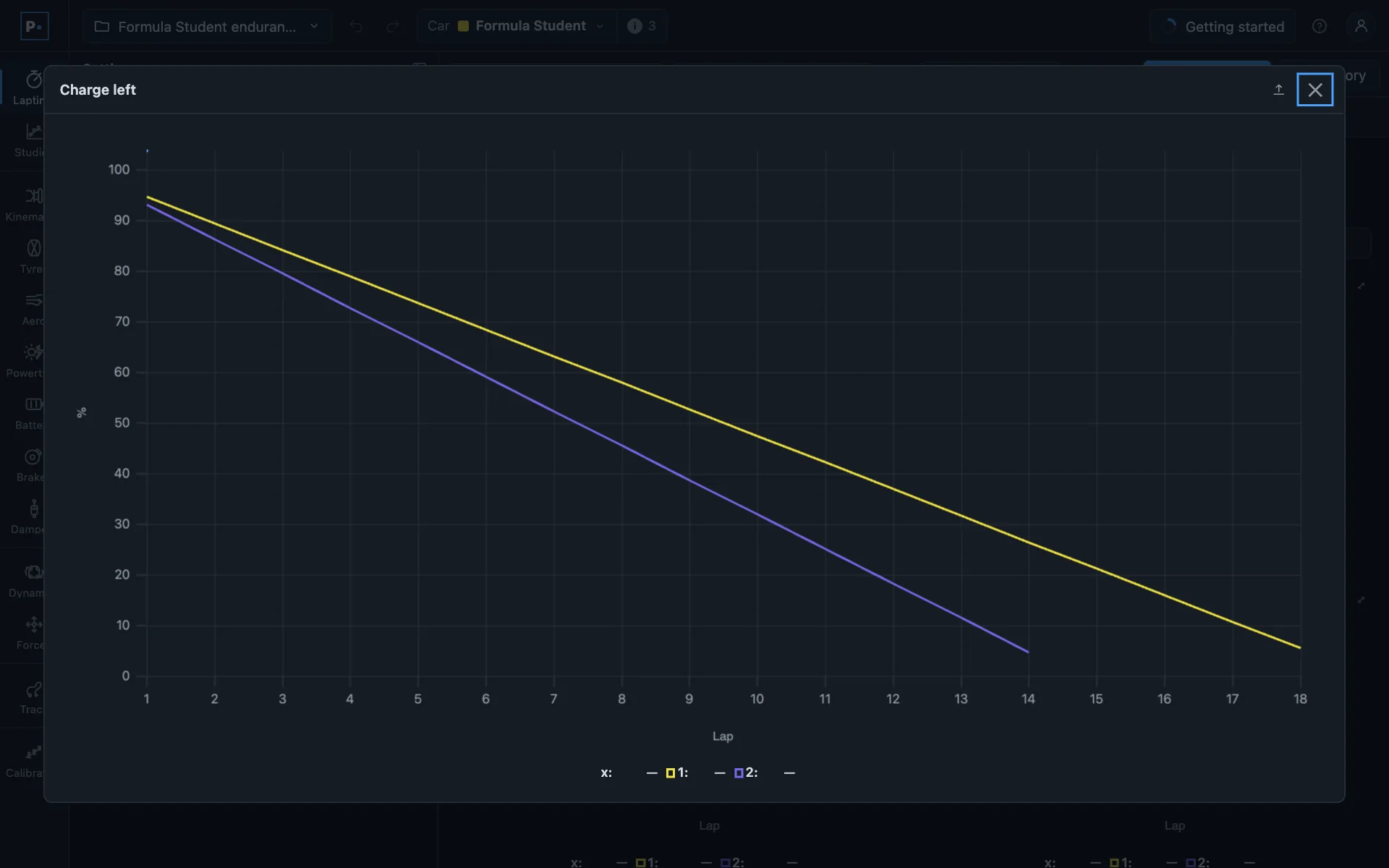
ENERGY / ENDURANCE
Know if the pack gets you to the finish
Formula Student FSG endurance
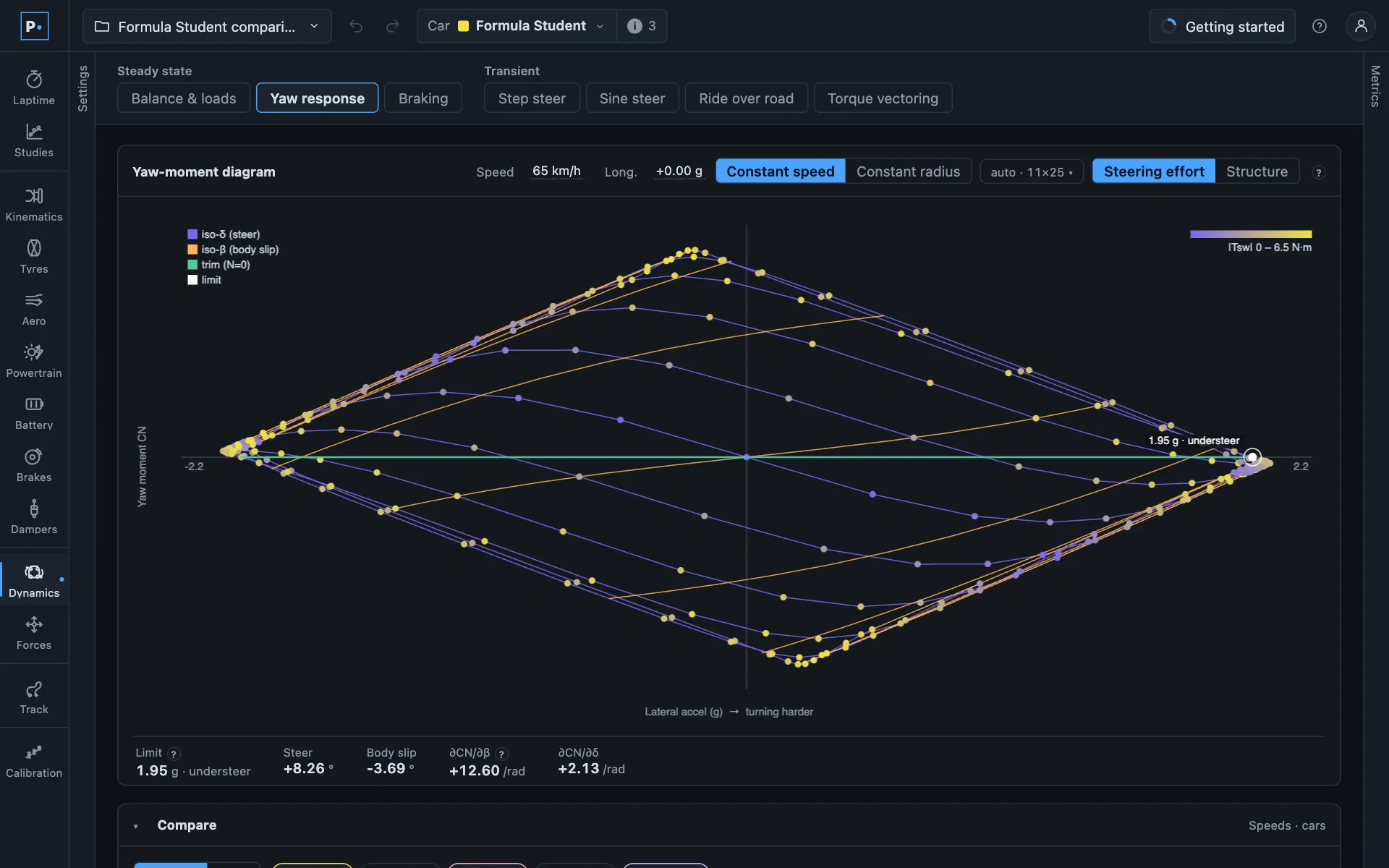
DYNAMICS / YAW MOMENT
See balance, authority and the limit
Formula Student 65 km/h
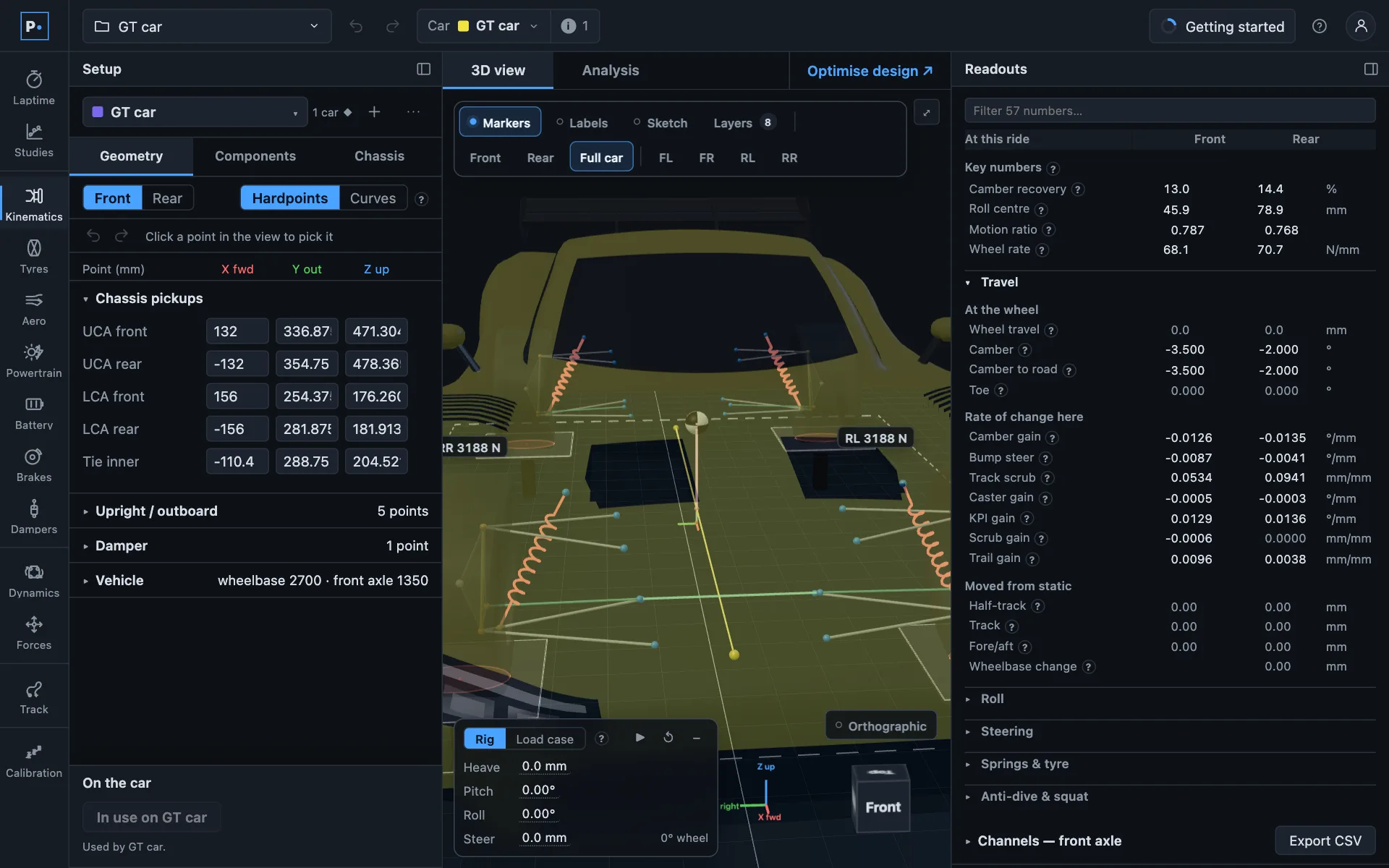
KINEMATICS / 3-D LINKAGE
Move a hardpoint, watch the car change
GT car front axle
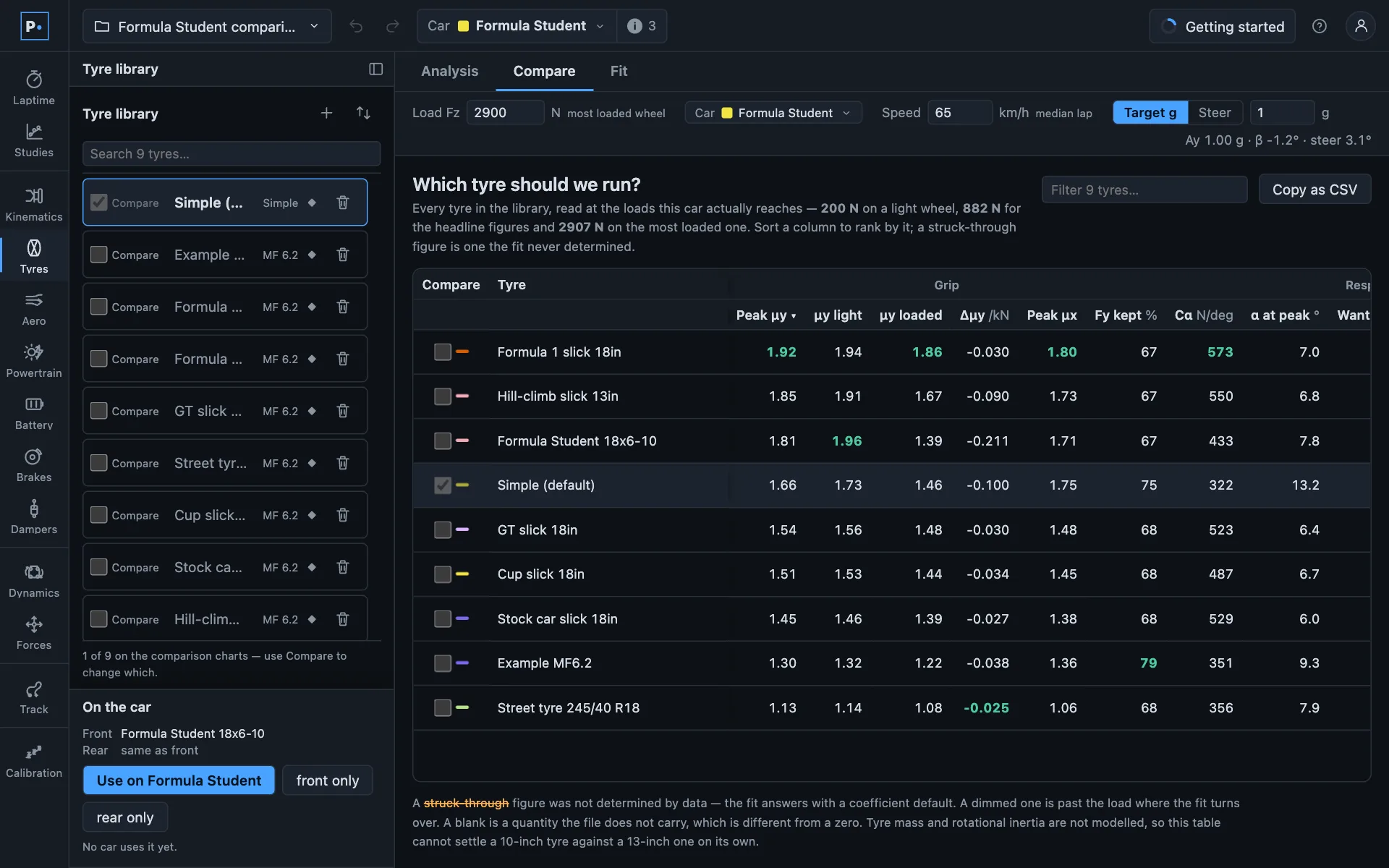
TYRES / WHICH TO RUN
Pick the tyre on the loads the car sees
Formula Student tyre library
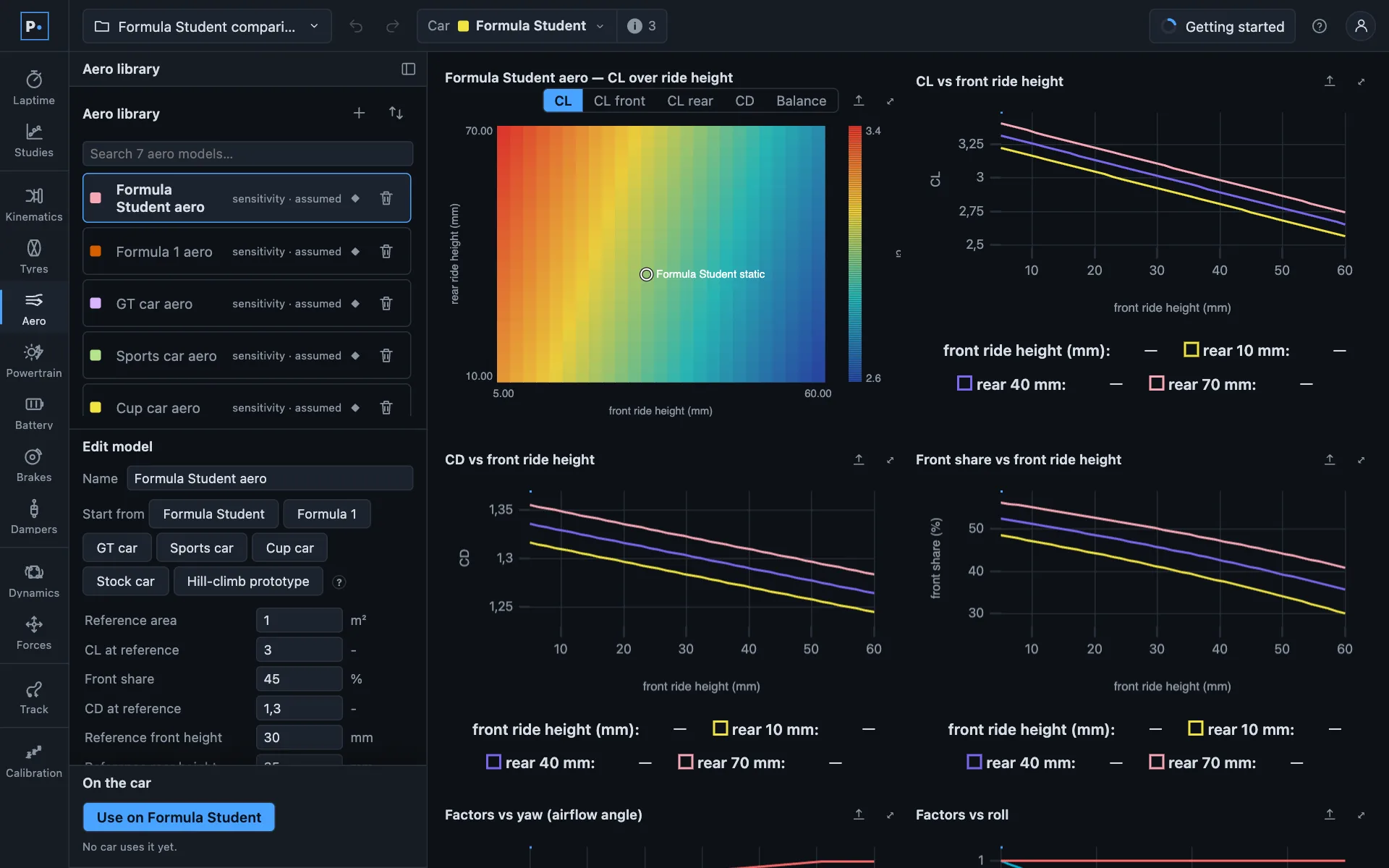
AERODYNAMICS / PLATFORM MAP
Connect ride height to aero balance
Formula Student aero map
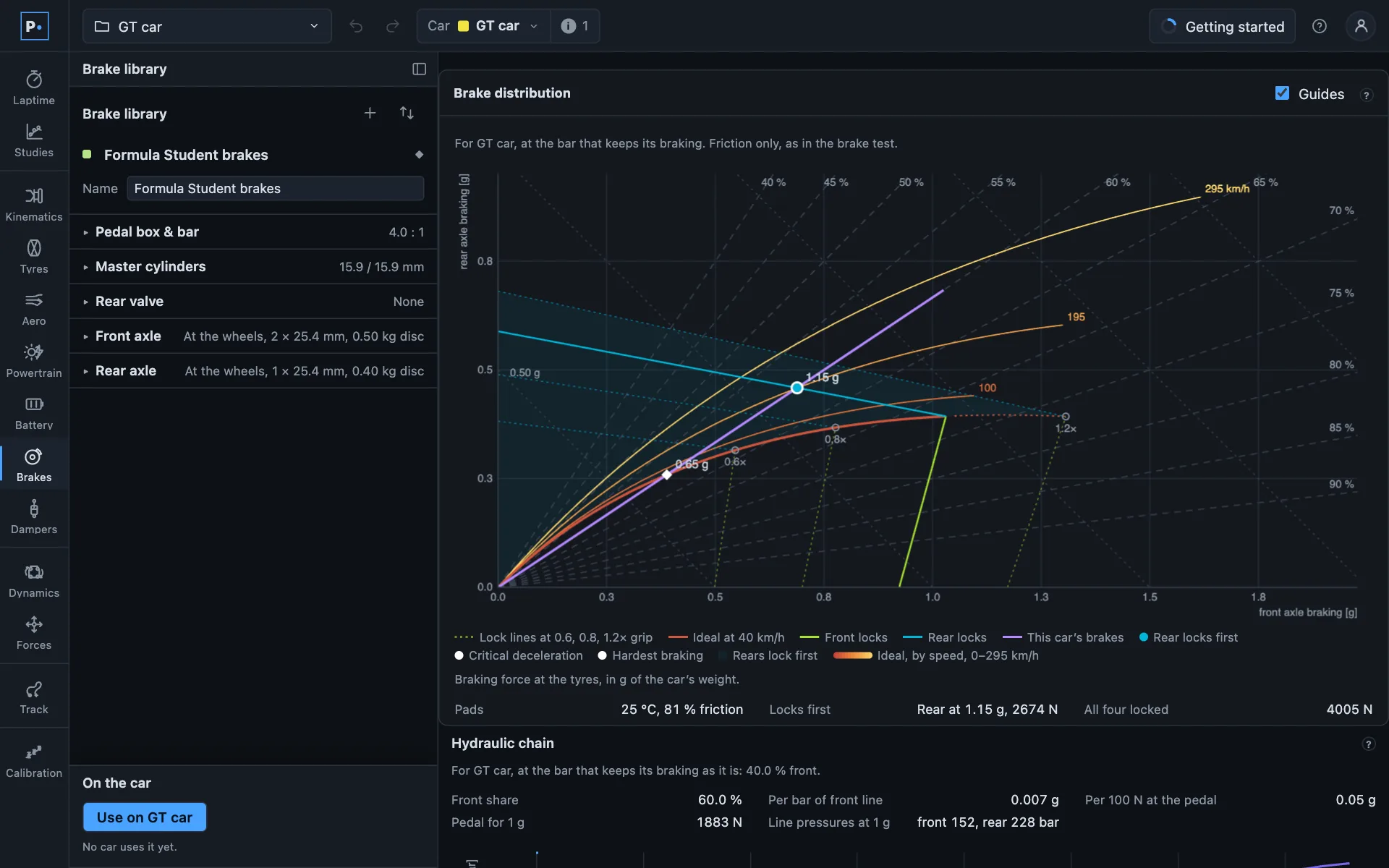
BRAKES / BALANCE
See which axle locks first, at every speed
GT car brake test
03 / How it works
The simulation chain
Five models between a part and a lap time.
A lap time is not one calculation. The grip envelope says what the car can do, the racing line where it drives, the quasi-steady lap how fast it goes, the transient car whether it can be driven that way, and the optimal planner what it could do driven perfectly. Each answers its own question and says what it leaves out.
01 / Grip envelope · GGV
What can the car do at each speed?
The envelope is the edge of what the tyres, the aero and the drive allow together: at each speed, the most the car can accelerate or brake while it corners at a given lateral acceleration. Every quasi-steady lap, sweep and study reads it.
How it is solved
- The lateral limit. At a ladder of speeds, the four-wheel model sweeps the steer from straight ahead, trims the body slip until the yaw moments balance, and follows that branch to its peak lateral acceleration.
- Load transfer. Cornering moves load across the car through the roll centres, springs and bars; braking and drive move it between the axles. Each tyre's grip is read at its own load. That is how anti-roll bars, the roll split and brake balance reach the lap time.
- The combined edge. Below the lateral limit each tyre keeps its cornering share and offers the rest of its combined-slip grip to drive and braking. Motor torque, pack power and brake balance cap what is used; drag and rolling resistance come off the top.
- Downforce. Aero load grows with the square of speed, so the envelope widens as the car goes faster: g of cornering at km/h, g at .
Use it for
- Seeing what limits the car at a speed: grip, motor torque or pack power.
- Judging a setup change — bars, balance, aero, tyres — before running a lap.
- The input to every quasi-steady lap, sweep and design study.
It leaves out
- Time. Every point is a settled steady state: no turn-in, no yaw inertia, no body motion.
- A yaw balance under drive and braking: each tyre keeps the cornering share of the steady corner, so the combined edge is an approximation.
02 / Racing line · minimum curvature
Where on the road does the car drive?
A driver uses the width of the road to open the corners. The racing line is the path inside the corridor with the least total curvature, ∫κ² ds measured along the line itself, solved for each car before its lap.
- Lap time
- → s
- Length
- → m
- Tightest radius
- → m
How it is solved
- The corridor. The road's width, less half the car's track, a tyre and a margin on each side. A wider car has less room.
- The unknowns. The line is a lateral offset from the centre-line, bounded by the corridor and kept short of where a tight corner's normals cross.
- The lap is then solved on the line's own curvature. The racing line is on by default.
Use it for
- Lap times that use the road as a driver does: on this corridor the template is % quicker than on the centre-line.
- Comparing corridors and car widths.
- A fixed path for design studies, so a faster car is not mistaken for a different line.
It leaves out
- Lap time. Curvature is a geometric proxy: it ignores distance and weighs every metre alike, while a lap is decided by its slowest corners. On a skidpad it takes the widest circle, which need not be the quickest.
- The car, apart from its width: the line is the same for any power, grip or balance.
03 / Quasi-steady lap · QSS
How fast is the lap with the car at its limit everywhere?
The lap as a chain of steady states. At every point of the line the car sits on the edge of its envelope — cornering, braking or accelerating as hard as it can — and the speed profile is where those limits meet.
- Lap
- s
- Top speed
- km/h
- Slowest corner
- km/h
How it is solved
- Curvature. Read the curvature κ all along the line.
- Corner limit. At each point, the highest speed whose cornering demand v²κ the envelope can hold, with the grip that downforce adds at that speed.
- Braking pass. Walking backwards, lower each speed until the car can brake to the next with the grip cornering leaves it.
- Acceleration pass. Walking forwards, cap each speed by what the drive and the remaining grip can add.
- Lap time adds up each stretch's length over its speed. On a closed lap the passes repeat until the start line agrees with itself.
- On the same passes: grade and banking, the pack's charge lap by lap, motor heat and brake fade, and an energy target that holds the speed down so an endurance finishes.
Use it for
- Everything that needs many laps: setups, parts, sweeps and optimiser studies.
- Whole events: acceleration, skidpad, autocross, and endurance with its energy.
- Where the time goes: braking points, minimum speeds and what limits each metre.
It leaves out
- Yaw inertia: the car changes direction for free. An optional term charges for it — half a second to a second on a Formula Student endurance lap.
- Driver and body: no steering lag, no corrections, no suspension motion or tyre lag.
04 / Transient · a driver on a dynamic car
Can the car actually be driven like that?
The car as a dynamic system, integrated in time: a body that heaves, pitches, rolls and yaws on four wheels that move up and down, with tyre forces that build up over the tyre's relaxation length. Here the car has to be turned in, and a driver has to hold it on the line.
How it is solved
- The plant. Ten mechanical degrees of freedom — position, yaw, heave, pitch, roll and four wheel hops — plus a lagging slip angle at each tyre.
- Loads from the suspension. Lateral load moves through the roll centres at once and through the springs as the body rolls, so it takes the roll mode's time. Tyre forces read combined grip at those loads.
- The driver. Steer follows the line's curvature, corrected for the offset from the line, the heading and the yaw rate. Drive and brake follow the quasi-steady lap's speed, held back by the grip and the powertrain.
- The lap time is the quickest run that stays within 1 m of the line (adjustable).
Use it for
- Checking that a quasi-steady lap can be driven, and how much of its pace a modelled driver keeps.
- Turn-in: step and sine steer give yaw response, overshoot, lag and body slip.
- Body control and torque vectoring: damping, roll and the controller, on the same plant.
It leaves out
- Wheel spin: slip ratio is not a state, and drive and brake forces are clipped to the grip.
- Camber change with wheel travel.
- A human: the driver is a feedback law, not a racing driver. A good driver should be quicker, and a lost run can be the driver's limit rather than the car's.
05 / Optimal · time-optimal planner
What could this car do, driven perfectly?
Line and speed solved together, as one optimal-control problem over the whole lap: the trajectory that takes the least time while the car obeys its dynamics, its tyres and the edges of the road.
minimise
T = ∫ ds / ṡ, ṡ = (vx cos ξ − vy sin ξ) / (1 − n κ)
subject to the four-wheel dynamics, each tyre inside its combined-slip limit, the drive curve, steering lock and rate, and −wR ≤ n ≤ wL.
How it is solved
- Distance, not time. The state is the offset n, the heading to the track ξ, the velocities vx and vy and the yaw rate r; the controls are steer and one longitudinal force, split by brake balance and drive layout.
- The car. Four wheels with live lateral load transfer. Each tyre's combined-slip use and slip angle stay inside its limits, and the drive stays under its curve.
- The solve. The whole lap at once, as a flying lap that ends in the state it starts in, on our server.
- Trust. An independent check re-evaluates every constraint before a plan is accepted.
Use it for
- The benchmark: what a lap is worth when line and speed both answer to lap time.
- Where geometry misleads: on a skidpad it finds the quickest radius; the racing line takes the widest.
- A better path for studies: a plan's line can be fixed for every quasi-steady run.
- The trajectory and controls of that lap, driven in the 3-D replay.
Read it with care
- It is not always quicker than the quasi-steady lap. It pays for the yaw and slip the quasi-steady lap gets free while it finds a better line: two effects in one gap.
- No battery or energy limit yet, and closed circuits only.
Which model answers which question
| The question | Envelope | Racing line | Quasi-steady | Transient | Optimal |
|---|---|---|---|---|---|
| What limits the car at this speed: grip, torque or power? | ● | ○ | |||
| Which way through this corridor? | ○ | ● | |||
| How much lap time does this part or setup buy? | ● | ○ | ○ | ||
| Points and energy over a Formula Student event? | ● | ||||
| Does the car turn in, overshoot, settle? | ● | ||||
| Can this lap actually be driven? | ● | ○ | |||
| What is the best this car could do? | ● | ||||
| One run on FSG, on a laptop | ~0.5 s | ~15 ms | ~15 ms a lap | ~30 s | Minutes · on our server |
● answers it○ in part, or slowly
04 / One workflow
Trace the consequence
From a part to a decision—without rebuilding the car.
A shared vehicle model keeps inputs, physics, studies and results connected. Change one assumption and every dependent answer knows.
Build
Define the ingredients
Geometry, tyres, aero, motors, batteries, mass properties and the track live as inspectable models with units and provenance.
Understand
Solve the whole vehicle
Follow kinematics, loads, ride, roll, yaw, forces, power and energy through the same car instead of a chain of disconnected sheets.
Explore
Ask better what-ifs
Compare variants, sweep sensitivities and optimise against goals and constraints while keeping the active design in view.
Decide
Measure it on track
See the lap, energy and event-score consequence, find where the gap lives and turn that stretch into the next study.
05 / Agent interface
PaceDynamics MCP server
The same simulator has an interface for your assistant.
Open a project, inspect or change a car, run the events, sweep a parameter, search the design space and export the result through natural language. The MCP server calls the same vehicle model and solver core as the app—so it does not invent a second version of the maths.
Clauderemote or local
Codexdesktop, CLI or IDE
ChatGPTcustom MCP app
ChatGPT custom apps require an eligible plan and workspace developer mode.
- 01
project_openLoad the same .pace.json project the browser uses.
- 02
vehicle_get · vehicle_setInspect the active model, change a setup and keep superseded inputs explicit.
- 03
run_session · run_traceRun the scored field and read the solved path without a second calculation.
- 04
sweep · study_runExplore sensitivity or search a constrained design on a cancellable worker.
- 05
project_exportBring the updated project and filed results back to the app.
06 / Suspension lab
A real 3-D model, not a cutaway illustration
From road-car struts to decoupled modes.
Start from a solvable architecture, move every hardpoint and inspect the actual linkage in three dimensions. The template accelerates the first step; it never decides the design.
07 / Built to inspect
Simulation should show its work.
Connected by construction
Suspension, tyres, aero, powertrain, energy, dynamics and lap time read from one version of the car.
Data stays distinguishable
Measured, imported, assumed and derived values remain visibly different, with validity and simplifications called out.
Questions become studies
Move from a lap-time gap to comparisons, sweeps and constrained optimisation without reconstructing the model.
Your browser does real work
Most analysis runs locally, with server compute reserved for the genuinely harder solve.
Private preview · by invitation
Interested? Tell me where to send an invitation.
PaceDynamics is currently available by invitation only. Leave your email and a short, pre-addressed message will open in your email app.
Already invited or have an account? Sign in